
Extractor fans are one of the simplest tools for managing moisture in a property, yet they are often misunderstood or used incorrectly. When used properly, they help control humidity, reduce condensation and prevent mould growth. When used poorly, they can give a false sense of protection while moisture continues to build.
This guide explains how to use an extractor fan effectively, what to avoid and how to recognise whether it is doing its job.
Why Extractor Fans Matter in Moisture Control
Bathrooms and kitchens naturally produce high levels of moisture, especially during activities like showering or cooking. Without proper ventilation, that moisture settles on walls, ceilings and fixtures, gradually leading to damp and in many cases, mould.
An extractor fan works by removing humid air directly from the source and pushing it outside. This controlled removal is far more effective than relying on passive airflow alone.

When Should You Use an Extractor Fan?
An extractor fan should be used whenever moisture is being generated, not after the fact.
In bathrooms, this means switching it on before or at the very start of a shower. Allowing steam to build before activating the fan makes it harder to remove that moisture efficiently. The same principle applies in kitchens when boiling water or cooking.
The goal is to manage moisture as it is created, rather than trying to deal with it once it has already spread throughout the room.
How Long Should an Extractor Fan Stay On?
One of the most common mistakes is turning the fan off too early. Even when the visible steam has cleared, moisture often remains in the air and on surfaces.
A good rule is to keep the extractor fan running for at least 20 to 30 minutes after moisture-producing activity has finished. This allows enough time for the remaining humidity to be removed before it can settle into the structure of the property.
In spaces that are particularly prone to damp, leaving the fan on slightly longer can make a noticeable difference over time.

The Right Way to Use an Extractor Fan
Using an extractor fan effectively is less about switching it on and more about creating the right conditions for it to work.
As David Bly, Managing Director of Cornerstone, explains:
“I have visited many properties that are experiencing damp issues on walls, ceilings or mould growth in their bathrooms, even though they are using an extractor fan or opening windows to clear the moisture in the room. There is lots of information online and a common misconception is to open windows and doors to clear humidity, but doing this just circulates rather than allowing it to be pulled out through the fan. You want controlled airflow, not air drifting everywhere. So, prioritise the extractor fan and keep it running during your shower and for 20 to 30 minutes afterwards, keeping the door closed while showering so the fan can effectively pull steam out, then open the door slightly or fully after your shower to let fresh air in while the fan continues running.”
This highlights a key point. Extractor fans work best when airflow is controlled, not when air is allowed to move freely in multiple directions.
Signs Your Extractor Fan Is Working Properly
A well-functioning extractor fan should noticeably reduce steam and humidity in the room. You should see mirrors clearing more quickly and surfaces drying within a reasonable timeframe after use.
The air should feel less heavy and lingering condensation on walls or ceilings should be minimal. Over time, consistent use should also help prevent recurring damp patches or mould from forming.
If these improvements are not happening, it may indicate that the fan is not performing as it should.
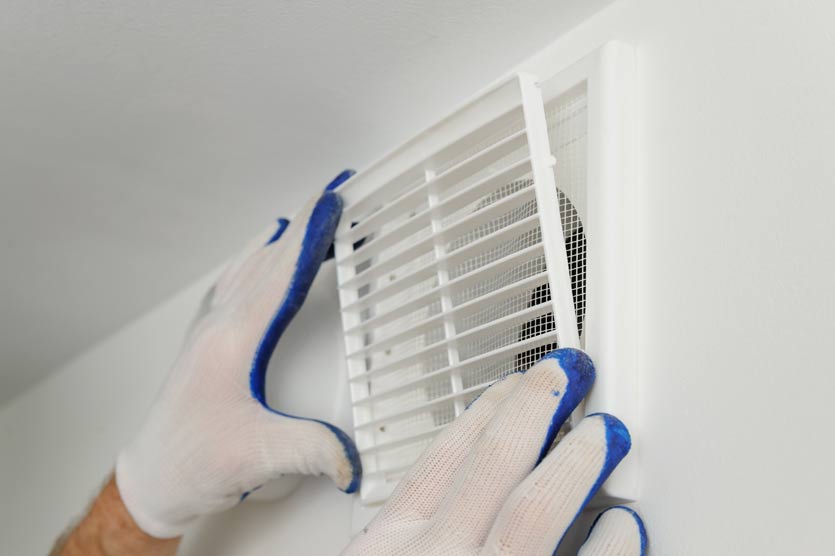
Signs Your Extractor Fan May Not Be Working
Sometimes a fan is running but not actually removing enough moisture. This can happen due to poor installation, blockages or simply using the fan incorrectly. If condensation lingers long after use, if mould continues to appear despite regular ventilation, or if the room still feels damp, these are signs that the fan is not effectively extracting air.
Noise alone is not a reliable indicator. A fan can sound active while still underperforming.
Need Help with Damp or Ventilation Issues?
If you are experiencing ongoing damp, condensation or mould despite using an extractor fan, it may be time to look deeper into the cause. A professional ventilation assessment can identify whether the issue lies with ventilation, hidden moisture or something more structural.
Speak to Cornerstone, a ventilation UK specialist today! Understand what is happening in your property and take the right steps to resolve it properly.


