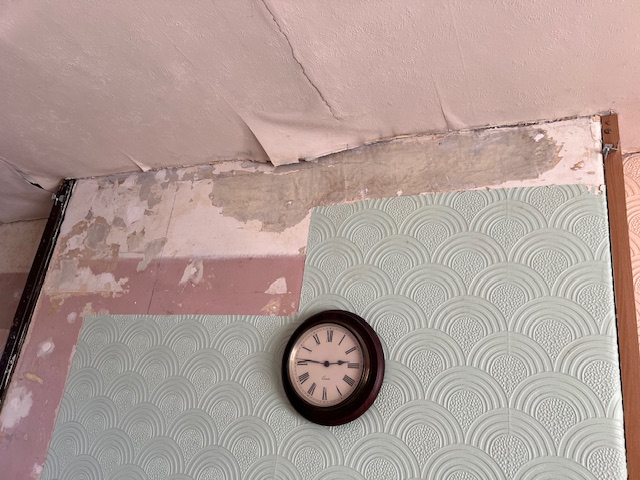
Overview of the Water Damage Incident
A severe ceiling pipe leak caused extensive water damage to a residential property in Richmond, affecting the lounge and landing areas. The water leak led to saturated ceilings, walls and flooring, while repair work left the landing carpet lifted and unsecured.
This case required a sensitive, structured approach due to the homeowners being elderly and the volume of contents within the property.
Key Challenges of This Water Damage Claim:
Extensive Saturation Across Multiple Surfaces
The leak impacted several structural elements, including ceilings, walls and flooring, increasing the risk of long-term damage such as mould growth and structural weakening.
Vulnerable Occupants Requiring Careful Handling
The homeowners required a considerate and supportive approach, ensuring minimal disruption while maintaining safety and clarity throughout the process.
High Volume of Contents in the Affected Area
The lounge contained a large number of personal belongings, requiring careful packing, protection and temporary storage before restoration work could begin.
Our Water Damage Restoration Process:
Content Management and Safe Packing
Our technician worked closely with the homeowners to prioritise personal items. While they handled sentimental belongings, our team carefully packed the remaining contents into secure storage boxes, ensuring protection throughout the restoration process.
Strip-Out and Preparation for Effective Structural Drying
With the property cleared and contents safely stored, the focus shifted to exposing the full extent of the water damage. Saturated carpets and underlay were carefully removed to prevent moisture from being trapped beneath the surface. At the same time, damaged wall coverings and ceiling paper were stripped back to allow the structure to breathe.
Every affected area was then thoroughly sanitised, reducing the risk of contamination and creating a clean foundation for the drying process. This stage plays a critical role in water damage restoration, as it ensures that moisture is not hidden behind finishes where it can later lead to mould growth or structural issues.
Targeted Drying and Moisture Management
Once the property was fully prepared, our specialist drying equipment was installed to address moisture throughout the structure. Rather than relying on surface drying alone, our approach focused on drawing moisture out from within ceilings, walls and subfloor areas.
Air movement and controlled dehumidification worked together to accelerate evaporation while maintaining safe humidity levels throughout the property. Progress was monitored closely using moisture readings, ensuring that drying remained on track and aligned with insurance and industry standards.
This level of control is what separates professional flood and water damage drying from basic air drying, providing confidence that the property is truly dry beneath the surface.
A Fully Dried and Stabilised Property Within 14 Days
Over a 14-day period, the drying process steadily restored the property to a safe and stable condition. Each affected area was tested and confirmed dry, ensuring no residual moisture remained within the structure.
With conditions returned to normal, the landing carpet was carefully refitted and professionally cleaned, restoring both appearance and function. By the end of the process, the home was fully prepared for reinstatement works, allowing decoration and repairs to move forward without delay.
The result was not just a dry property, but one that was properly stabilised and ready for the next stage of recovery.


Supporting a Smooth Energy Provider Insurance Claim
As this project formed part of an energy provider’s insurance claim, the restoration process needed to meet strict reporting and compliance requirements. From initial assessment through to final drying verification, every stage was documented clearly and accurately.
This included tracking moisture levels, recording actions taken and ensuring all work aligned with insurer expectations. By maintaining this level of detail, the claim progressed efficiently, reducing friction for both the homeowner and the insurer.
Our role extended beyond restoration, providing clarity and reassurance throughout what can often feel like a complex claims process.
Why a Professional Approach to Water Damage Makes the Difference
Water damage is rarely just what you can see. Moisture often penetrates deep into materials, where it can quietly lead to mould growth, material degradation and long-term indoor air quality issues if not properly addressed.
A professional approach ensures that drying goes beyond the surface, combining careful strip-out, controlled drying and ongoing monitoring to fully resolve the problem. It also brings structure to the process, from handling contents with care through to supporting insurance requirements.
For homeowners, this means fewer complications, faster recovery and confidence that the property has been restored the right way.
Need Help with Water Damage in Your Property?
If you are dealing with a ceiling leak, burst pipe or internal flooding, taking action early can make a significant difference to both the outcome and the cost of repairs.
At Cornerstone, our team provides expert water damage restoration, from initial assessment and content handling through to full structural drying and insurance support. We work closely with homeowners and insurers to make the process as smooth and stress-free as possible.
Get in touch today to arrange a site visit or speak to a specialist about your situation.


