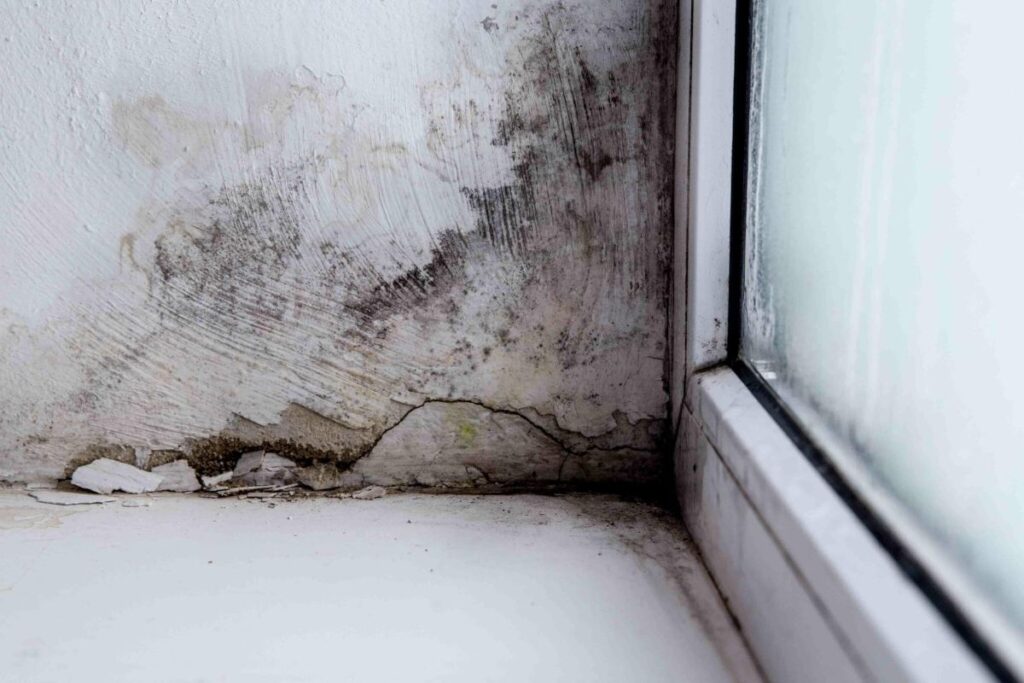
Damp and mould is unfortunately common in many UK homes. These are property destroying dangers that reek havoc on houses across the UK.
Did you know that when you walk into a room and experience that musty odour, are actually taking in organic compounds that suggest mould is active somewhere. The issue remains with locating the root cause.

What is mould?
Moulds are simple microscopic organisms present virtually anywhere both indoors and outdoors and, to grow and reproduce they need a food source. Such sources can be wallpaper, plasterboard, paint, some carpets, adhesives, wood fabrics and other organic materials.
Mould in bathrooms is not feeding on the tiles but on the biofilm residue on it and, because they are so small, a thin layer of dust or debris will yield a sufficient and sustainable food source. In addition, and of equal importance, mould growth affecting contents can only be sustained by the atmospheric moisture conditions in the property. This being elevated atmospheric moisture levels and cooler air and surface temperatures.
Once established, mould in a property will quickly colonize areas with appropriate conditions and, although properties have periods of high occupational moisture, it is the prolonged periods that will allow mould to develop. When mould is present in a structure the period of time it will take to colonize new areas is reduced due to the increased level of spores being produced in an enclosed area.

The effect on humans varies greatly and can be simply understood by how quickly we each would get burnt in the sun? However, those in mouldy environments may suffer colds, flu-like symptoms, viruses etc as a result. But, it is recognised that any ailment is difficult to prove and, the effect on humans can also depend upon the amount of mould present, the type, the pathway to a person, how long they have been exposed and how sensitive the person or persons are.
The Property MOT
No mould is welcome in a dwelling and its subsequent removal is key in order to remove the ongoing sporulation that will be occurring. Using a bleach product does NOT work as, although the surface will appear clean and clear, the root system of the outbreak will remain and, when conditions prevail for a reduced period, it will readily develop again. Mould can be made worse by simple household tasks, including but not limited to building faults, poor ventilation, condensation, drying clothes, inadequate heating, cooking and bathing. Small things such as opening windows when cooking and keeping your house at a constant temperature can help to combat damp and mould, but once mould is present you need to get to the root of the problem.
The Property Mot provides a cost-effective and unique approach to the management of tenanted properties aligned to upholding current Housing Acts and ultimately Certifying the Health of a dwelling. Get in touch with our team today to find out more and eradicate damp and mould in your property for good.